
Technical accessibility, re-observation and evidence in AI search
The approved page is current and carefully reviewed. It is blocked, poorly linked, inconsistently rendered or difficult to associate with the correct entity.
A third-party source becomes easier to retrieve.
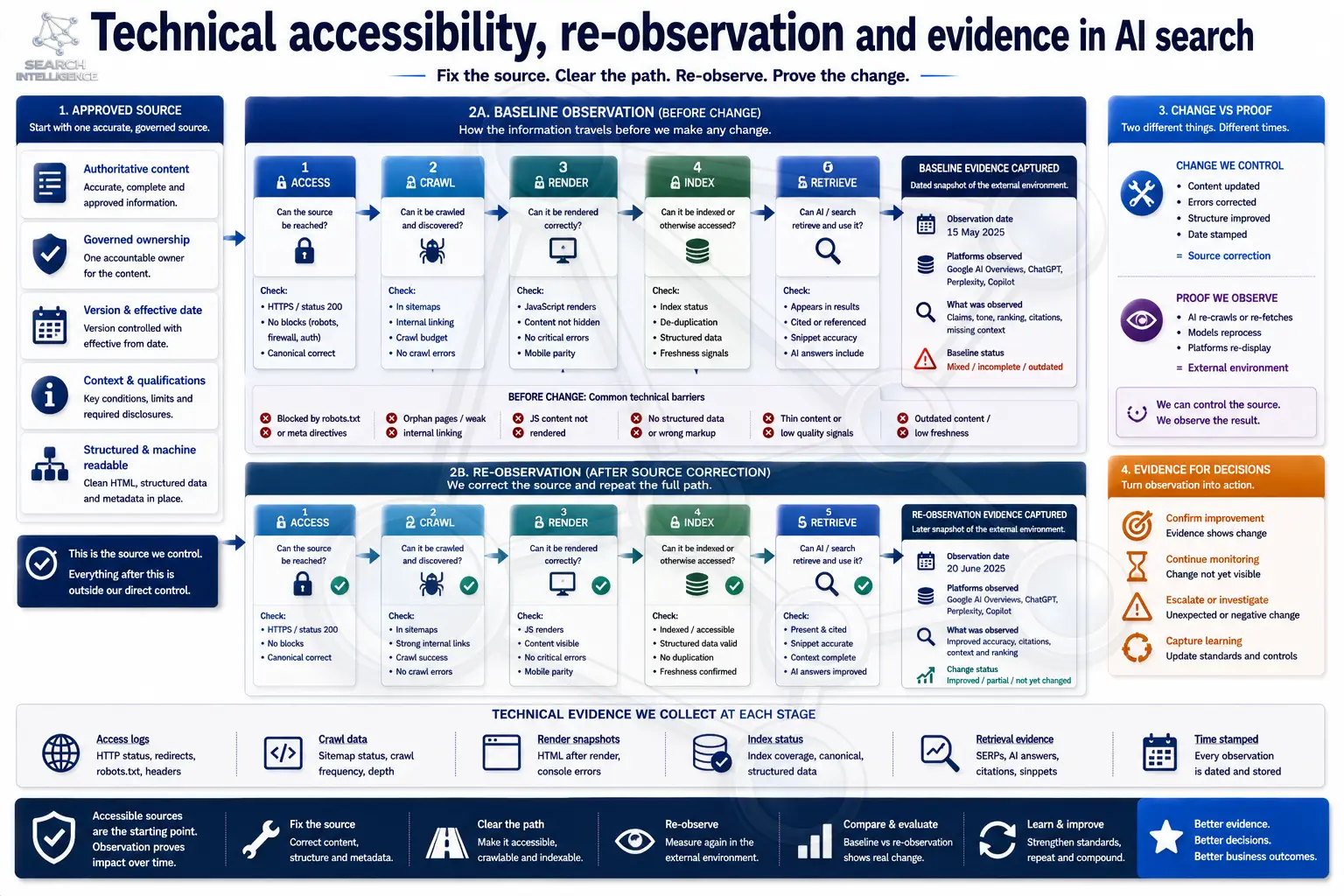
The model at a glance
Technical foundations still matter
Capture the baseline
Correction is not complete when the page is published
Improve the conditions, not the answer
The organisation can improve the conditions from which reliable representation may emerge. It cannot guarantee a particular answer, citation or permanence.
A technical-accessibility example
The better source loses to the easier source.
An approved Product guide renders after a complex script, receives few internal links and has an unstable canonical relationship with a shorter summary page. An older third-party page is simple, static and widely referenced.
What re-observation can prove
Four things it can show. One it cannot.
It cannot prove permanent control of future answers.
A sensible review cadence
High-consequence Product or claim changes may require prompt review. Stable evergreen information may be reviewed less frequently. Platform or source changes may trigger event-based re-observation. Regulated information may follow formal approval and retention schedules.
What technical teams need from SI
More than "AI is wrong":
The customer experience remains the test
Technical accessibility is not an end in itself.
The approved source must help a customer find, understand and verify the information needed for a decision. A technically accessible page that remains confusing, incomplete or poorly connected still fails the customer.
Correct the source, then test the environment again.
Explore Technical Integrity, or return to the cornerstone framework.