
Who owns AI representation, and what changes in regulated sectors?
A misleading AI answer is identified. Marketing wants it corrected. SEO can improve source access. Product owns the facts. Compliance owns the regulated interpretation. Technology owns the platform. Corporate Affairs is concerned about public consequence.
Who decides what happens next?
The model at a glance
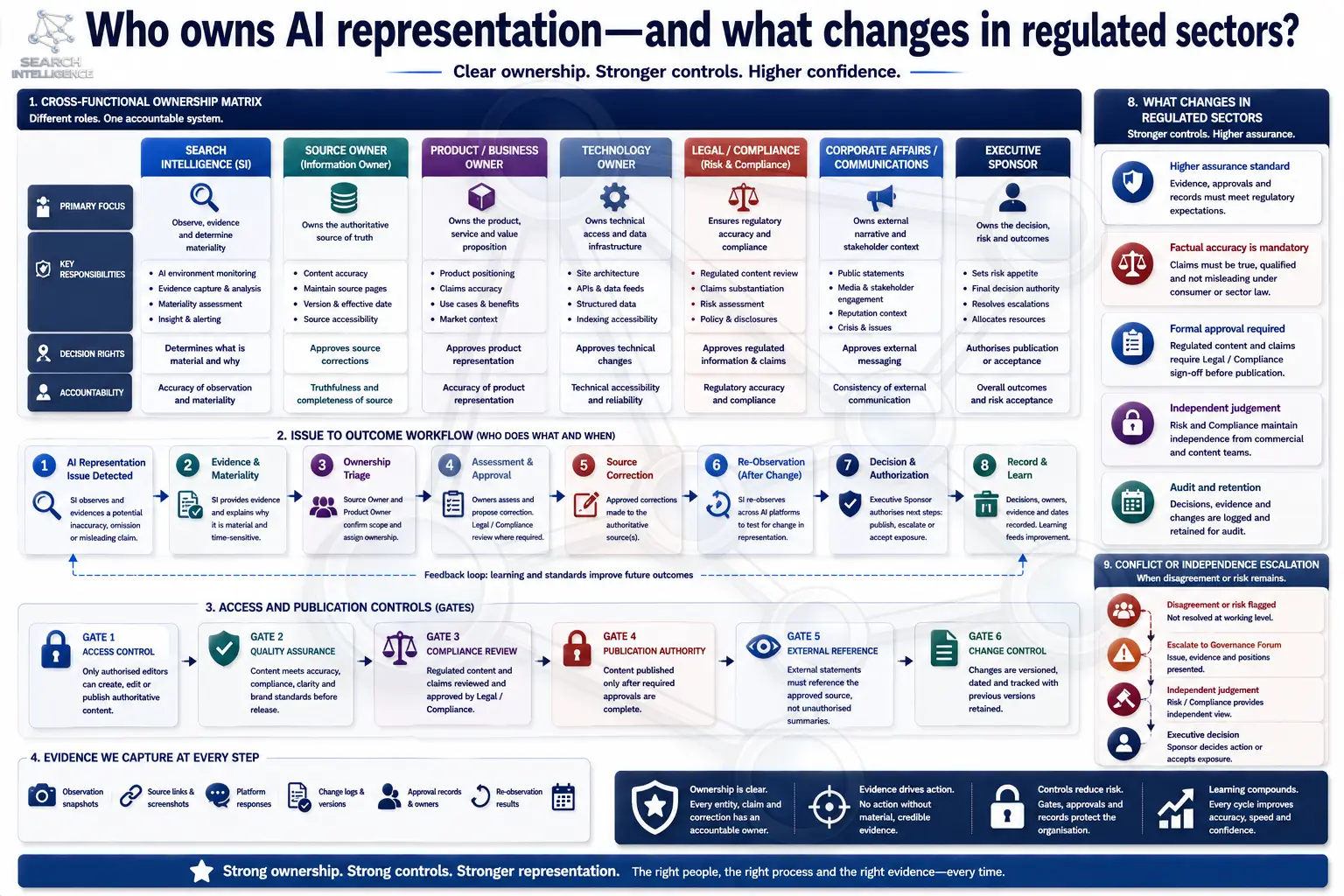
The likely ownership model
Seven roles, one accountable chain.
Product / service owner
Confirms approved truth.
Brand and Content
Create clear, consistent public explanation.
SEO and Digital
Protect discovery, internal relationships and search eligibility.
Technology and Data
Protect source systems, feeds, entity identifiers and access.
Risk, Compliance, Legal or medical specialists
Retain authorised judgement where regulated claims or interpretation are involved.
Corporate Affairs
Manages material public narrative and correction strategy.
Search Governance
Connects evidence, materiality, decision, owner, action and re-observation.
Regulated sectors need stronger boundaries
Regulated environments need stronger boundaries.
SI identifies and evidences the public condition. Authorised specialists retain regulated judgement.
Access follows need, confidentiality and agreed authority
The engagement defines who can see each layer:
Seven possible responses
A regulated-sector scenario
An AI answer omits a material limitation.
The governed response runs in seven steps.
SI coordinates the evidence and governance process. It does not replace authorised legal, compliance or Product judgement.
The access model
Six evidence classes, separated by design.
Raw evidence reaches only the people who need it for the agreed decision.
Publication control
No client name, evidence capture or outcome should become public merely because it supports SI's methodology. Publication requires client permission, evidence review, approved wording, limitations, sector-specialist review where necessary, and a retained approval record.
Conflict and independence
SI should disclose material conflicts and should not soften a finding to protect a supplier, sponsor or future engagement. A finding should not be escalated simply because it creates more work, materiality and evidence should govern the response.
Questions for the organisation
Seven authority questions to settle first.
Assign authority before promising correction.
Explore Trust and Assurance, or return to the cornerstone framework.