
Source-of-truth architecture for AI-mediated search
The website shows one Product condition. A PDF shows another. A retailer feed is older. A support page uses legacy wording. A third-party publisher copied the original version.
Which source should the customer, or an AI system, trust?
The model at a glance
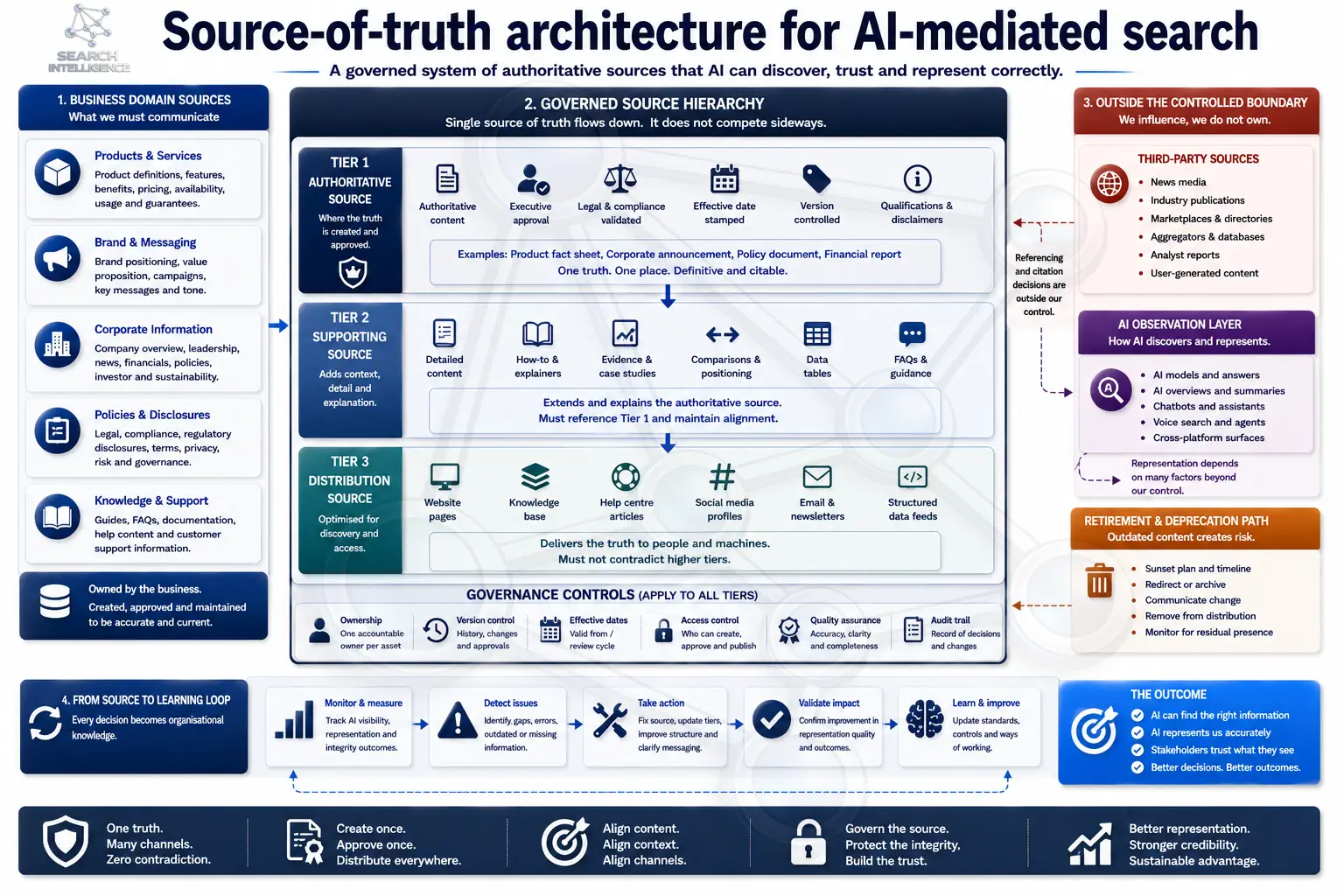
Ten decisions the organisation has to make
The chain from approved record to archive
The hierarchy differs by organisation and sector.
Language can change. Material truth cannot.
These must never change accidentally because the format changed:
It connects the conflict to an owner
A source-of-truth example
Five sources describe one claim differently.
A pharmaceutical organisation cannot solve this by editing one page.
Why source hierarchy helps teams
Every team gets one unambiguous answer.
Content
Knows where to obtain approved information.
SEO
Knows which source should be discoverable.
Technology
Understands which page or feed must remain stable.
Product
Can see where changes propagate.
Corporate Affairs and assurance
Can trace the public statement.
Ten fields per governed fact
Influence is not ownership
The organisation does not control publishers, retailers, reviews or AI systems. It can:
A source should have a retirement path
Publishing the current version is only half the job.
Old PDFs, campaign pages, partner feeds and cached explanations keep influencing customers and external systems.
Without that discipline the organisation keeps adding truth without reducing contradiction.
Make the approved truth findable and governable.
Explore Trust Architecture, or return to the cornerstone framework.